

Investment Loans Sydney: Borrowing Power and Structure for 2026 (and How to Improve It)
Sydney investors are watching interest rates and rental markets closely as they plan their next moves. Borrowing power isn’t just about income; it also hinges on expenses, buffers, debts and loan structure. Knowing which levers to pull can make all the difference.
Investment borrowing power is determined by your income, expenses, existing debt, rental yields and the loan structure you choose. Lenders often apply higher assessment rates and shade down rental income, reducing the amount you can borrow. To improve your borrowing capacity in 2026, minimise personal debts, tidy up your expenses, maintain a strong credit profile and have complete documentation ready. The right loan structure – such as principal-and-interest or interest-only – should align with your strategy and cashflow needs.
- Lenders use your income, living expenses, existing debts and rental income (usually shaded down) to calculate borrowing power.
- Reducing discretionary spending, paying down credit cards and closing unused credit facilities can increase your capacity.
- Rent income is often assessed at 70-80 percent of its actual value to account for vacancies and costs.
- Maintain a cash buffer and consider how rate rises could affect your investment strategy. Stay informed via the RBA cash rate statistics.
- Use calculators and speak with a broker to model different scenarios.
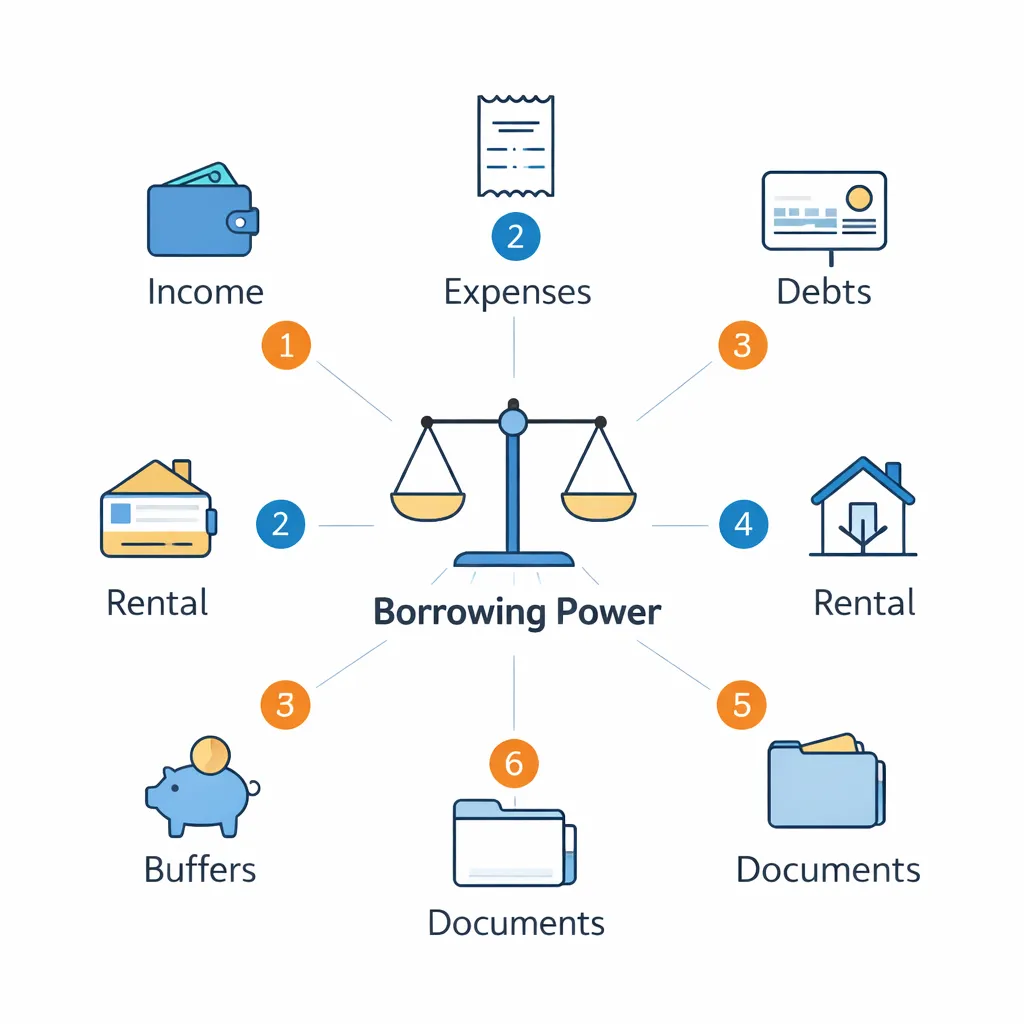
What determines investment borrowing power?
Lenders assess several factors when determining how much you can borrow for an investment property. Understanding these factors helps you take control:
1. Income and rental yields
Your salary, bonuses and other income form the base of your borrowing capacity. For investment loans, rental income plays a role, but lenders typically shade it down to 70-80 percent to allow for vacancies and costs. Consider setting realistic rent expectations when planning.
2. Living expenses
Banks use household expense benchmarks and your declared spending to estimate living costs. High discretionary spending can reduce your borrowing capacity. Reviewing subscriptions, dining out and other non-essentials may free up capacity for your investment goals.
3. Existing debts
Credit cards, personal loans, car finance and other mortgages all reduce your borrowing power. Even unused credit limits are treated as potential debt. Paying off or reducing these facilities before applying can improve your assessment.
4. Buffers and assessment rates
To ensure you can handle future rate rises, lenders may assess you at about 3 per cent higher than your actual rate when assessing your application (e.g. 6 percent tested around 9 percent). This stress test can significantly lower your assessed capacity. Maintaining a cash buffer helps you cope with rising rates and signals prudent planning.
5. Documentation readiness
Complete and accurate documentation speeds up approval and enhances confidence in your application. Prepare tax returns, pay slips, rental statements and loan statements. Keeping your financial records up to date ensures your borrowing power is assessed accurately.
Borrowing power levers
| Lever | Why it matters | What to do this week |
| Increase income | Higher income boosts capacity. Lenders assess both salary and rental income (shaded). | Explore overtime, side income or adjusting rent to market rates. |
| Reduce expenses | Lower living costs free up borrowing power. | Review subscriptions, negotiate utility bills and plan meals at home. |
| Pay down debts | Credit cards and personal loans reduce capacity. | Pay off or reduce credit limits and close unused cards. |
| Build a buffer | Savings cushion against rate rises and surprises. | Set aside a portion of your salary each pay cycle into a dedicated buffer account. |
| Get documents ready | Complete paperwork speeds up approval and reduces uncertainty. | Gather tax returns, payslips, rental statements and loan documents. |
Loan structure choices
Note: Choosing a loan structure is tax-sensitive for investors. This information is general and does not constitute personal advice. Always speak with your accountant to understand the tax implications and ensure your structure aligns with your long-term strategy.
1. Principal-and-interest
Repaying both principal and interest reduces your debt over time. Monthly repayments are higher than for interest-only loans. Whether this structure suits an investor depends on cashflow, goals and professional tax advice. Speak with your accountant to understand the tax implications and ensure it aligns with your strategy. Zippy typically considers this only in specific investor scenarios (for example, if you don’t have an owner-occupied home loan) and where your accountant confirms it fits your tax plan.
2. Interest-only
You pay only the interest for a set period, keeping repayments lower and preserving cash flow. This can improve short-term cashflow or help you service multiple properties. You won’t reduce the principal during the interest-only period, and you’ll need a plan for when it ends. Pricing depends on lender policy and product; investor loans are often priced differently from owner-occupied loans, so talk to your broker and accountant. Most investors go Interest Only on their investments loans on advice from their Accountant so make sure you speak to your Account and get the tax advice you need to decide if you pay Interest only.
3. Keep investor loan structures simple
Investor loan structures should remain straightforward to minimise tax and administrative complexities. Keeping your loan purpose clean and clear and aligning the structure with your accountant’s advice ensures it supports your investment strategy.
How to improve your borrowing power
Improving borrowing power isn’t just about earning more. Consider these practical strategies:
- Tidy your budget: Audit your monthly spending and cut unnecessary expenses. Even small reductions can lift your borrowing capacity.
- Reduce credit limits: Lenders count your total credit card limits, not your balances. Lowering limits or cancelling cards can help.
- Consolidate debts: Rolling high-interest debt into a lower-rate loan may reduce monthly commitments and improve assessment.
- Keep stable employment: Lenders prefer consistent income. Avoid job changes or probation periods when applying.
- Document rental income: Provide lease agreements, rental statements and tax returns to verify income. If you use a property manager, ensure their statements are up to date.
- Check your credit report: Correct any errors and pay bills on time to maintain a strong credit score.
How Zippy Financial helps
Zippy Financial understands the challenges Sydney investors face. We assess your borrowing power using up-to-date lender calculators, identify your constraints and suggest strategies to improve your capacity. Our team can recommend loan structures aligned with your investment goals and cashflow. Visit our investment loans page, explore our article on borrowing power strategies and use our calculators to model scenarios. When you’re ready to act, contact us for personalised guidance.
FAQs
How is investment borrowing power different from owner-occupied borrowing power?
Lenders apply higher interest rates and shade rental income when assessing investment loans. They also look at your entire portfolio and cash reserves, which can reduce your borrowing capacity compared with owner-occupied loans.
Can I use equity from my home to invest?
Yes. You can unlock equity in your existing home to fund a deposit on an investment property. This may increase your LVR on the existing property, so ensure you have a buffer and can afford the repayments.
What documents do I need for an investment loan?
Lenders usually require tax returns, pay slips, rental statements, lease agreements and statements for existing loans. They may also ask for bank statements, rates notices and evidence of savings.
Should I choose interest-only or principal-and-interest?
It depends on your strategy and tax position. Interest-only loans free up cashflow but keep your debt level high and should be assessed with your accountanttaking into account the tax advantages in doing this. Principal-and-interest loans build equity faster but cost more each month and may suit some investors depending on cashflow, goals and tax advice. Always seek professional advice before choosing a structure.
How can I prepare if rates rise further?
Build a cash buffer, reduce personal debts and avoid over-leveraging. Model your repayments at higher rates using calculators or speak with a broker to stress-test your budget. Staying ahead of the market keeps your portfolio resilient.
Take control of your investment strategy
If you’re planning your next purchase or want to optimise your existing portfolio, Zippy Financial can help. We’ll analyse your borrowing power, structure your loan to match your goals and guide you through approval. Visit our investment loans page, read our borrowing power strategies article or contact us for personalised advice.
Disclaimer
This article offers general information and does not constitute financial advice. Lending criteria and tax laws change, and investment loans are complex. Always seek independent advice based on your circumstances.