

Sydney Refinance Update Feb 2026: Is This Your Window to Refinance Before Things Move Again?
The Reserve Bank of Australia (RBA) has just lifted the cash rate effective 4 February 2026. Mortgage costs tend to follow quickly. If you’re a Sydney owner-occupier wondering whether to secure a better deal before conditions tighten again, this guide provides a calm decision-making framework.
Most Sydney borrowers considering a refinance in early 2026 should focus on the gap between their current loan and competitive offers, along with fees and available equity. The recent cash rate increase suggests that mortgage costs could edge higher. If your current loan is meaningfully higher than competitive offers and you plan to stay in your home for several years, refinancing now may save you money.
Make sure you understand the costs, check your loan-to-value ratio and use a calculator to work out your break-even point.
• The RBA board increased the cash rate on 3 February 2026, and further moves are possible this year. Read the cash rate overview for context.
• Compare your current loan with competitive offers. The bigger the gap, the more potential benefit.
• Consider exit fees, break costs on fixed loans, Lenders Mortgage Insurance and application fees before switching. The MoneySmart switching home loans guide explains these costs.
• Aim for strong equity in your property and keep a comfortable cashflow buffer to handle future changes.
• Use an online mortgage switching calculator or speak with a broker to check your break-even period.
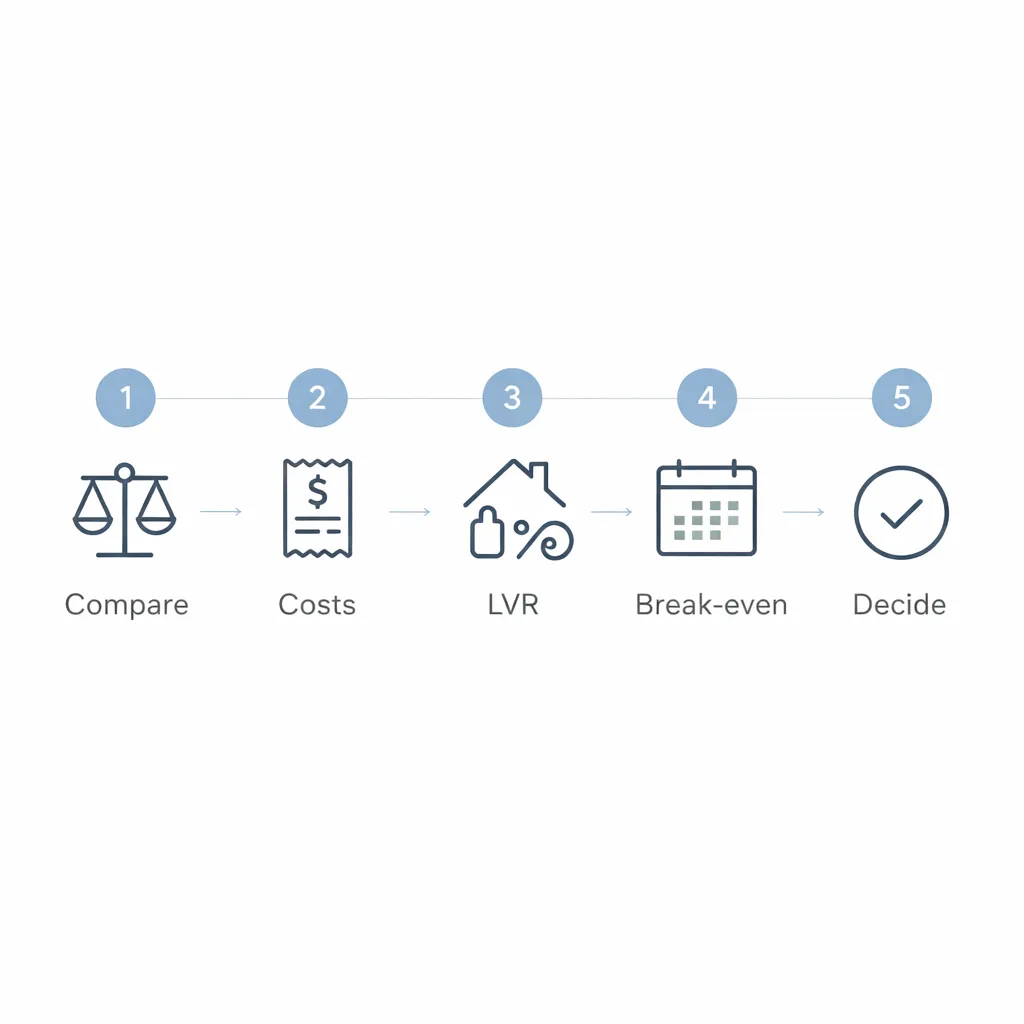
Why refinancing might make sense in 2026
The RBA meets eight times a year to set the official cash rate. In early February 2026 the Board increased the cash rate. This move followed signs that inflation picked up in late 2025 and price pressures may persist. Banks usually pass cash rate changes on to customers, so variable home loan costs are likely to rise over the coming months.
Refinancing lets you switch to a more competitive loan or access better features. There can be a substantial difference between advertised variable loans. That spread means homeowners who haven’t reviewed their loan in a while could be paying far more than necessary. Acting before the next RBA meeting in March gives you time to compare options and avoid potential increases.
Factors to consider before refinancing:-
Difference between your current loan and the market
Start by checking your current loan against the best available offers. If you’re paying noticeably more than comparable borrowers, refinancing could reduce your repayments significantly. Remember that advertised “from” offers often apply only to low-risk borrowers and may not include fees.
Fees and charges
Refinancing isn’t free. You might face break costs on a fixed loan, discharge fees, application fees or switching fees. Cashback offers can look tempting, but they may not offset higher ongoing costs. Compare the total cost over at least two years, not just the introductory offer. ASIC’s tips for refinancing outline the fees to watch.
Loan-to-value ratio and LMI
Your loan-to-value ratio (LVR) — the portion of your property’s value that you owe — matters. If your LVR is high, lenders usually charge Lenders Mortgage Insurance (LMI). LMI protects the lender, not you, and it can add thousands of dollars to your costs. Growing your equity before refinancing can help avoid LMI and secure better loan terms.
Features and flexibility
Consider whether you need features like offset accounts, redraw facilities or the ability to make extra repayments. Paying for features you don’t use wastes money, yet the right feature can help you pay off your loan sooner. Check if the new loan offers the flexibility you need without unnecessary extras.
Cashflow buffer
Mortgage costs are unlikely to stay at today’s levels forever. When calculating your new repayments, allow room in your budget for future increases. Aim to maintain a cash buffer equal to several months of mortgage payments. This helps you avoid stress if conditions change or your circumstances shift.
Loan term
Switching lenders may reset your loan term. If you have many years remaining and take out a new long-term loan, you could pay more over time. Negotiate a similar or shorter term to stay on track toward paying down your mortgage. Or take over the linger loan term but increase your repayments yourself from day 1 so that the loan term is in effect reduced but giving you the flexibility of reducing your repayments at any time should you need to.
Should I refinance now? Checklist
Use the following checklist to decide if refinancing is right for you:
- Check your current loan: Compare your existing terms against current advertised offers using online comparison tools.
• Ask your lender for a better deal: Your existing lender may improve your loan to keep your business.
• Calculate your equity: Estimate your home’s value and subtract your loan balance; strong equity improves your options.
• List all costs: Note break fees, discharge fees, application fees, potential LMI and any government charges such as transfer duty.
• Use a calculator: Visit a mortgage switching calculator or one of the calculators on our site to see how long it will take to recover the costs.
• Consider your timeframe: If you plan to keep the property for only a short period, switching costs may outweigh savings.
• Speak with an expert: A broker like Zippy Financial can help you compare options without hype and manage the paperwork.
Break-even thinking
Your break-even period is the time it takes for savings to outweigh the costs of switching. To estimate it, divide total refinancing costs (including fees and any LMI) by your expected monthly savings.
For example, if switching saves a few hundred dollars per month and costs several thousand dollars upfront, your break-even point may be around a year and a half. If you plan to stay in your home longer than that, you’re more likely to benefit.
Use a mortgage switching calculator or the tools on our website to run the numbers.
Refinance decision drivers
|
Factor |
What to check |
|
Loan competitiveness |
Compare your current loan to what’s available in the market. Even a small gap can add up over time. |
|
Fees & charges |
Add up break fees, discharge fees, application fees and any LMI. Include ongoing package fees. |
|
Features |
Decide whether you need an offset account, redraw facility or repayment flexibility. Don’t pay for features you won’t use. |
|
LVR |
Work out your loan-to-value ratio. Lower LVRs generally qualify for better terms and avoid LMI. |
|
Cashflow buffer |
Ensure you have savings to cover unexpected costs and future increases. |
|
Time to break even |
Estimate how long it takes for savings to exceed switching costs. Longer than your expected stay? Reconsider. |
How Zippy Financial helps
At Zippy Financial we specialise in helping Sydney homeowners cut through complexity. Our brokers analyse your current loan, compare the true cost of new options and explain the pros and cons. We use our knowledge of the market and our internal calculators to show your potential savings and break-even period. We also review your loan-to-value ratio and help you understand whether you’ll need LMI.
Read our guide on the true cost of low-cost mortgages to see why the cheapest option isn’t always the best. When you’re ready, our home loan specialists handle the paperwork and negotiate with lenders.
FAQs
What is the cash rate and why does it matter?
The cash rate is the benchmark set by the RBA that influences borrowing costs across the economy. When the RBA changes the cash rate, banks usually adjust their home loan pricing soon after. A higher cash rate generally means higher repayments for borrowers.
How do I know if I have enough equity to refinance?
Equity is the difference between your property’s market value and your loan balance. Lenders typically want borrowers to have a solid equity position to access better terms and avoid LMI. A local broker can help you estimate your property value and calculate your LVR.
What fees are involved in refinancing?
Common costs include discharge fees, application fees, valuation fees and, for fixed loans, break costs. If your LVR is high you may also need to pay LMI. Comparing the total cost is essential.
What is a comparison rate?
A comparison rate bundles the main loan cost together with most fees and charges into a single figure. It helps you compare the true cost of different loans. Be aware that comparison figures are based on a set loan amount and term, so your actual costs may vary.
When is the next RBA meeting?
The RBA usually meets eight times a year. After the February meeting, the next decision is scheduled for March. You can stay up to date via the RBA’s cash rate statistics page.
Take the next step
If you’re considering refinancing, Zippy Financial can help you decide whether now is the right time. We’ll analyse your current loan, estimate your break-even period and compare options from multiple lenders. Visit our home loans page or contact us for personalised advice.
Disclaimer
This article provides general information only and does not constitute financial advice. Loan pricing and fees change, and eligibility varies. Always consider your personal circumstances and seek tailored advice.